

“Write to the angel of the church in Smyrna: Thus says the First and the Last, the one who was dead and came to life: 9 I know your affliction and poverty, but you are rich. I know the slander of those who say they are Jews and are not, but are a synagogue of Satan. 10 Don’t be afraid of what you are about to suffer. Look, the devil is about to throw some of you into prison to test you, and you will experience affliction for ten days. Be faithful to the point of death, and I will give you the crown of life. 11“Let anyone who has ears to hear listen to what the Spirit says to the churches. The one who conquers will never be harmed by the second death.” -Revelation 2:8-11 (CSB)
A tarnished medallion.
That’s what I discovered when I opened the shadow box hanging on the wall in my home study during some recent spring cleaning. Despite my best attempts to preserve the middle school medal I won more than 20 years ago, there it was, in all of its tarnished “glory.” The once shiny and carefully polished finish was now covered with a strange film rendering the language on the front more like ancient hieroglyphics than the English words of a junior high academic award. The ravages of time are cruel to all, I suppose…even to fake gold-coated zinc.

How often do we look back on the evidence of accomplishments for which we once yearned, only to discover that, in a remarkably short time, both their physical substance and our once passionate interest in the challenge they represented have faded?
The fleeting nature of earthly trophies and the challenges and accomplishments they represent is often thought of in sad and melancholy terms. Songs, poems, and eulogies have all been written that reflect the transitory nature of earthly glory and accomplishments. Once outstanding feats are superseded by younger competitors. What was breathtaking to one generation becomes mundane and expected by the next. Records are made to be broken. And medallions do, indeed, tarnish. Even monarchs have to contend with the wear and tear of royal regalia and the ongoing maintenance and resizing of state crowns, as the recent coronations of King Charles III and Queen Camilla of the United Kingdom attest.
Yet, as Christians, we recognize that there is a crown that doesn’t fade. This unfading crown isn’t a diadem adorning royal heads, but rather an eternal crown awarded by the King of Kings and Lord of Lords to His faithful servants. Unlike the crowns of nations and empires, the crown of life Jesus speaks of in Revelation 2:8-11 needs no repairs – and never tarnishes.
The Recipients: The Church at Smyrna (v. 8).
The recipients of the letter of Revelation 2:8-11 are the believers who composed the church at Smyrna. Smyrna was a proud and successful city located on the west coast of Asia Minor at the head of the gulf into which the Hermus River terminates.[1] The first-century city of Smyrna was what is today the modern city of Izmir, located in Turkey.[2] Patterson pointed out that, “Ismir, the third largest city in modern Turkey, is literally built on the rubble of ancient Smyrna.”[3] Famous for its beauty, the city boasted a population of more than 100,000 that also included a considerable Jewish population.[4] Given its location, the city was an important seaport in Asia Minor and a vital component of the major trade route that ran through the area. Smyrna was well-known for excellence in the practice of medicine and scientific advancement and was home to numerous guilds of fishermen, tanners, silversmiths, and goldsmiths. However, worship of pagan deities and the Roman emperor were prerequisites to membership in the guilds and the trades they represented.[5] In his commentary on Revelation 2:8-11, Morris noted that Smyrna was “one of the first cities to worship the Roman emperor and it won the honour of erecting a temple to him in the reign of Tiberius… Smyrna was a faithful ally of Rome in the days before Rome was acknowledged in the region, so its loyalty meant something.”[6]
Given the social surroundings and socioeconomic environment in which it ministered, the church at Smyrna was a persecuted group of followers of Jesus who knew considerable challenges and difficulties in their service to the Savior. Patterson reflected that “Smyrna then was famous for two things: first, its beauty and, second, its suffering.”[7] The city had a large number of Jews who were influential in the politics of Smyrna and hostile to the Christians living in the city. Smyrna was also known to the wider Christian church as the place where Polycarp, the well-known bishop of the church in Smyrna, was executed on February 23, AD 155.[8] Polycarp was among the most famous of the early Christian martyrs, and his death at the hands of Christianity’s opponents exemplified the broader suffering and persecution so familiar to the first-century church located in this powerful and influential city.
The Speaker: Jesus, the First and the Last (v. 8).
The Lord Jesus once again identifies himself as the speaker to the angel of the church at Smyrna. When reading the letters to the churches of Asia Minor in the early chapters of the Revelation, it is important to remember that, while the repeated identification of the speaker in each letter as Jesus may seem redundant, it is not. The way in which Jesus identifies Himself at the outset of each letter serves to teach us about the nature of who He is – an area of theology called Christology. With each letter, Jesus is not only teaching us through the instructions, commendations, rebukes, and counsel He provides to each church; He is also teaching us vital truths in what He says about Himself. In his commentary on Revelation, Eugene Boring noted, “We see that these Christological statements at the beginning of each letter are neither casually chosen nor mere decorations, but they serve a theological purpose. The Letters contain ethical instructions and warnings, the commands of the risen Christ for living a faithful Christian life in a trying situation. Such commands cannot stand alone; they are not general or obvious moral truths. Their truth is bound up with the truth of the vision 1:9–20, that the crucified one is the exalted Lord vindicated by God and made Lord of all…the Christian life is founded on the fact and reality of Christ.”[9]

In identifying Himself, Jesus first announced that He is “the First and the Last.” (v. 8). This statement, echoing similar declarations of the Lord that He is the “Alpha and Omega,” emphasized to the church that He is the “the One who precedes all creation and will remain when all else is gone.”[10] As Dr. James Hamilton noted in his commentary on this passage, “There is depth here that cannot be plumbed.”[11] God is infinite and eternal. He has no beginning and no ending. Throughout all of life, we are accustomed to dates that frame existence. For individuals, we expect a birthday and a date of death. For goods, products, and equipment, we look for a date of manufacture and a date of retirement or disposal. For organizations, there is a date of formation or incorporation and a date of dissolution. Everything in our lives is framed by a beginning and ending – except God. In His eternal nature, He stands apart from the limits of time that frame His creation.
Next, the Lord moved to remind the church of his resurrection: “the one who was dead and came to life” (v. 8, CSB). The resurrection of Christ is the cornerstone of the Christian faith. As Spurgeon proclaimed, “Upon the incarnation, life, death, and resurrection of Jesus our salvation hinges. He who believes these truths aright hath believed the gospel, and believing the gospel he shall without doubt find eternal salvation therein.”[12] The resurrection proves that Jesus is the Son of God, verifies the truth of Scripture, assures us of our own future resurrection in Him, proves the reality of a future judgment, serves as the basis for Christ’s heavenly priesthood, gives power for Christian living, and assures Christians of their own future inheritance by faith in Christ.[13]
This phrase also conveys an additional layer of meaning in the Greek text from which the English text is translated. Patterson observed that, “The expression in the Greek New Testament is especially poignant. A literal translation would be ‘the one who became dead and is alive again.’ The use of the aorist middle indicative of ginomai seems to stress that his death was neither an expected part of his existence as with all of the known forms of life, nor was it something that overtook him by surprise. There is certain purpose that seems to be written into the expression “who became dead.”[14] The speaker is reminding all of us that not only did He live, die, and rise again, but His dying and rising was all part of the divinely orchestrated plan to bring salvation to the lost, deliverance to the spiritually captive, and everlasting life to all humanity that trusts in Him – who would otherwise be condemned to death, hell, and the grave. In being the “one who was dead and came to life,” Jesus has secured the glories of heaven for those who follow Him – even those facing the bitterest of persecutions and opposition from evil forces at work in the world.
The Commendation of Smyrna (vv. 9).
In contrast to other churches receiving letters in Asia Minor, it is striking that the Lord voiced no criticism or rebuke of the church at Smyrna. Smyrna is one of only two churches named in the letters of Revelation 1-3 that do not receive a rebuke (the other being the church at Philadelphia, 3:7-13). Instead, in verse 9, the Lord commends the church for four attributes that marked her character and conduct.
First, the church bore up under terrible persecution. Until the latter half of the first century, Christians enjoyed a degree of protection from state persecution at the hands of the Roman Empire by being classified as a sect of Judaism. Until the reign of the Roman Emperor Nero, Christians were broadly considered by the empire to be a movement within Judaism, which was exempt from worship of the emperor.[15] However, the scene began to shift after A.D. 64. During that year, a massive fire destroyed a significant portion of Rome, and Nero came under suspicion for deliberately causing the fire to suit his own interests (giving rise to the famous expression, “Nero fiddled while Rome burned”). Like many politicians before and after him, the emperor sought a scapegoat to deflect pressure and suspicion away from himself and found a convenient target in the Christian church.[16] Thus began a pattern of Roman state persecution toward Christians that would be repeated at varying intervals until the Emperor Constantine I issued the Edict of Milan in A.D. 313, establishing religious toleration for Christians throughout the Roman Empire.[17]
Patterson pointed out that recent events at the time of the writing of the Revelation had left the Jewish people throughout much of the world traumatized and devoid of hope. “Obviously the rebellion of the Jews in Palestine, which culminated in the war against Rome, the fall of the city of Jerusalem in AD 70, the mass suicide at Masada in the wake of Roman troops in AD 72, and eventually the further attempted rebellion of Bar Kochba—all had the effect of considerably diminishing confidence in Jewish people throughout the Roman world.”[18] Added to the backdrop of despair formed by these harrowing events, many Jews became increasingly concerned and alarmed about the new Christian faith making inroads within their own ranks and throughout much of the wider Roman Empire.
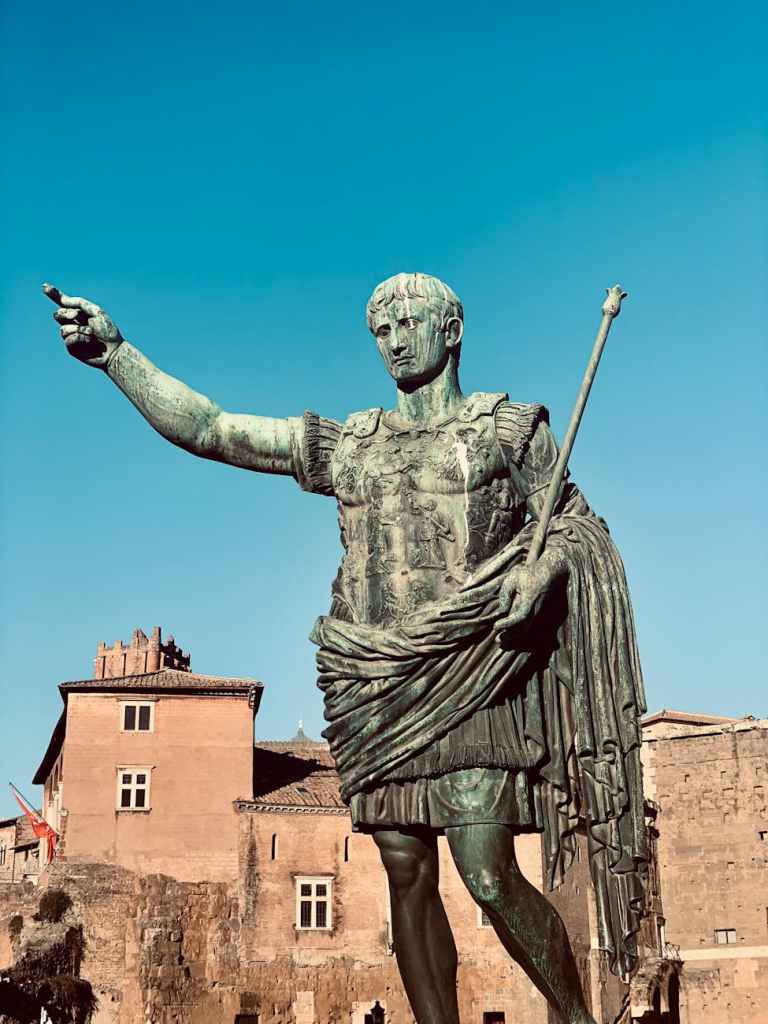
This concern ultimately led to an intense persecution of Christians by the Jewish communities in several cities throughout the first-century world, and notably in Smyrna. Add to this the equally intense state-sponsored persecution of Christians orchestrated during the reign of the Roman Emperor Domitian, who “donned the purple” in A.D. 81 (ruling until A.D. 96),[19] and one can see the terrifying and deadly predicament in which the early church, and particularly Smyrna, found itself. In response to this deadly crucible, it is important to see that Jesus did not trivialize their suffering, as many are tempted to do in such situations. He didn’t tell them it wasn’t really all that bad. He didn’t tell them this experience would ultimately be good for them. And he didn’t tell them to just think happy thoughts and keep their chin up. He didn’t dismiss or demean them but instead commended the church for its faithfulness through the terrifying trials of persecution. As Hamilton summarized, “Jesus ennobles their suffering with the simple and comforting words, ‘I know your tribulation.’”[20]
Second, the church stood fast through the trials of poverty. The term employed for poverty, πτωχείαν,[21] doesn’t mean that the believers at Smyrna were simply without iPhones, computers, TVs, or even electricity. This word communicates the absence of even the basic necessities of life: food, water, shelter, etc.[22] In Asia Minor, citizens who sought to advance their social standing and achieve greater economic prosperity and success could do so in part by participating in the cult of emperor worship. Beale pointed out that, “City officials were so dedicated to the cult that they even distributed money to citizens from public funds to pay for sacrifices to the emperor (in, for example, Ephesus). It was almost impossible to have a share in a city’s public life without also having a part in some aspect of the imperial cult.”[23] In our present context, the catchy slogan, “success means sacrifice!” comes to mind in a whole new way. For Christians who withstood the social, legal, and economic pressures to participate in the cult of Caesar worship, the costs were many and substantial. “Those refusing to participate were seen as politically disloyal and unpatriotic and would be arrested and punished according to Roman law (e.g., exile, capital punishment).”[24]
Notice, again, that Jesus did not dismiss or trivialize their suffering in poverty. He said to them, “I know your tribulation and your poverty.” (2:9 ESV). While they were dismissed, hated, persecuted, looked down upon, distrusted, and abused by their society, the Lord of Lords and the King of Kings – and the one to whom the emperor and all worldly rulers will one day bow the knee – saw them in their struggle, knew them in their struggle, and loved them in their struggle. And He sees, knows, and loves us in our struggles still today, as well. No matter how poor and destitute Christians may find themselves in this world, they are loved and cherished by the fount of all wealth and all blessing, both now and in eternity to come. The suffering and endurance of the church at Smyrna was not in vain then, and our suffering and endurance for Christ is not in vain today.
Third, despite their physical poverty, the church was spiritually wealthy. Despite the crippling poverty the church faced in terms of temporal circumstances, the Lord reminded them that they were, in fact, rich. But how on earth could that be? How could a church composed of members experiencing crushing poverty be rich?
First, we need to recognize that Jesus was not attempting to play some psychological trick on the believers at Smyrna. Rather, He is referring to a different type of wealth accumulated by the church beyond their physical circumstances. While we should never think of our faithfulness to Christ in terms of a mere balance sheet to be tabulated, we are right to remember that injustices, evils, and tribulations suffered by Christians in this life produce eternal rewards to be realized in the life to come. As Jesus reminded His followers, “Do not lay up for yourselves treasures on earth, where moth and rust destroy and where thieves break in and steal, but lay up for yourselves treasures in heaven, where neither moth nor rust destroys and where thieves do not break in and steal. For where your treasure is, there your heart will be also” (Matthew 6:19-21 ESV).

This same principle was echoed by the Apostle Paul in 2 Corinthians 6:10. He described himself as “poor, yet enriching many; as having nothing, yet possessing everything” (CSB). One of the great paradoxical truths of the Christian faith is that wealth in the Kingdom of God is not measured by the corruptible and fleeting means of dollars and cents, but by the eternal spiritual blessings of the throne of heaven – a wealth far greater, far grander, far sweeter, and far more precious than any sum of money accumulated in the present life. We are rich in Christ because we are saved by His grace.
Fourth, the church withstood intense slander. Slander, simply defined, is to express damaging lies against another. We don’t know the exact slander referred to by the Lord in verse 9, but a survey of the slanders broadly hurled against first and second century Christians by the opponents of the church can give us some idea. Patterson pointed out, “These included the charge of cannibalism since Christians were heard to talk about “eating the body” and “drinking the blood” of Christ [speaking of the Lord’s Supper]. Because they had “love feasts,” they were accused of immorality, specifically of an orgiastic nature. Because they did not accept the Greek gods, they were accused of atheism; and because they spoke so much about the fire of the Spirit and the fires of divine judgment, they were accused of being arsonists or incendiaries. In addition to that, their unwillingness to pay homage to Caesar as lord earned them the accusation of disloyalty to Rome. The intense loyalty they tended to demonstrate toward one another once they had embraced Christianity and the fact that particularly Jewish families would often virtually disown those who did become Christians were sufficient to have them charged with the splitting of families. Indeed, some of the words of Jesus might have been interpreted that way as when Jesus said that he had come to set “father against son and son against father, mother against daughter” (Luke 12:53). That Jews in Smyrna and elsewhere either developed or borrowed some of these slanderous accusations is easy to imagine.”[25]
Few things are as devastating to the human mind and heart as having malicious lies circulated about one’s faith. Faith speaks to the core of who we are, how we view and understand the world and our place in it, what we hope for, and what we love, cherish, and hold most dear. Those who slandered the Christians of Smyrna struck at the very essence of who they were. Yet, the Lord saw the church as it truly was – and He also saw the slanderers as they truly were. As Hamilton observed, “All who oppose King Jesus are allied with the dark power in service to a rebel kingdom whose lord is a liar and murderer who hates those who serve Jesus. Our Lord said that those who are not for him are against him (Matthew 12:30). And in language similar to the reference in Revelation to these Jews being a “synagogue of Satan” (2:9; cf. 3:9), in John 8:44 Jesus told his Jewish opponents that they were of their father the Devil.”[26]
The Lord advised that the Jews who viciously slandered the church were not truly Jews, but were, in fact, the “synagogue of Satan.” Patterson pointed out that “John is not questioning their ethnic derivation; rather he is indulging in the same argumentation the apostle Paul used when he said, ‘For not all who are descended from Israel are Israel’ (Rom 9:6–8).”[27] Just because they claimed the identity of Israel did not align them with the expectations of a holy God for His people. As Jesus reminded His followers when speaking about false prophets, we will know others by their fruits (Matt. 7:16). The fruit of the slanderers against the church at Smyrna was rotten to the core, and the Lord saw it. “Those Jews who had been guilty of the slanderous accusations against the Christians had not only rejected the Jewish Messiah but had also indulged in behavior clearly forbidden by Jewish law in order to guarantee their own physical and financial well-being. Consequently, John did not hesitate to say that though they claimed to be Jews, they were not the people of God and were, in fact, a part of the synagogue of Satan.”[28]
The Lord’s Counsel for Smyrna (v. 10).
Given all that the church had endured up to the present time, one would expect that the Lord might have a message of reprieve or some good news for the church at Smyrna and her situation. However, the counsel that the Lord presents to the church appears to be anything but that. Jesus instructed the church, “Don’t be afraid of what you are about to suffer. Look, the devil is about to throw some of you into prison to test you, and you will experience affliction for ten days.”
“What you are about to suffer?” Read that again…about to suffer?! Given the horrifying difficulties of the church’s situation that the Lord has already surveyed, one may wonder how much worse it could get. The Lord tells them that, for some of their members, their sufferings were to shortly intensify. That intensification would include prison (and the testing that came with it) and ominously undefined affliction. Then the Lord mentions an oddly specific time period of ten days. Scholars have offered various explanations for the specific meaning of the ten-day time period. However, most have conceded that no definitive explanation exists on this side of heaven other than what is simply given to us in the literal text.[29] While some have offered explanations that see some sort of code or symbolic meaning in the ten-day time period, Patterson argued that this is unlikely, and I concur.[30] While it is certainly possible that the ten-day period carries symbolic meaning as some type of a full, but limited, season of time, I think the best interpretive position, given its placement in the letters to the churches of Asia Minor, is to simply see it as a literal ten-day period of testing and persecution for those who would face it. Regardless of whether one interprets the ten days literally or symbolically, the key message of the Lord’s instruction is the same.

A crucial detail in the Lord’s instruction concerning this upcoming trial is far too easy to overlook. It comes at the very beginning of verse 10. “Don’t be afraid…” (v. 10). Let that sink in for a moment. Don’t be afraid. Do not fear. What a glorious exhortation and invitation! And yet, thinking of what was ahead of them, we naturally have to wrestle with the follow-up question of “how?” How could they not be afraid of what was coming? How could they not be afraid of prison? How could they not fear more affliction? And how could they not be terrified by the prospect of death?
The answer to these questions is found in what Jesus has already told them. Hamilton pointed out, “The only thing that will keep the Smyrnan Christians from fearing what they are about to suffer is their living on what Jesus has said to them thus far. He has announced himself as “the first and the last, who died and came to life” (2:8), and he has assured them that he knows what they suffer and knows who their enemies are (2:9). Because of who he is, and because he will be with them through the suffering, they can be free from fear.”[31] The way to triumph over fear is to look beyond the difficulties of our circumstances, as terrible and even horrifying as they may be, and to instead look to Jesus. As Corrie Ten Boom, a survivor of some of the worst atrocities imaginable, famously observed, “There is no pit so deep, that God’s love is not deeper still.”[32]
David declared in the Psalms, “I lift up my eyes to the hills. From where does my help come? My help comes from the LORD, who made heaven and earth” (Psalm 121:1-2 ESV). We triumph over fear not by looking down or around, but by looking up – to Christ, as our Savior and the author and finisher of our faith (Heb. 12:2). And, paradoxically, we triumph over fear of death itself by dying to self (Matt. 16:25-27). Of this, Hamilton further observed, “This is the only way to life: death. Death to self. Death to sin. Then you will be dead to the world and dead to fear. You will also be alive by the power of the Spirit and through faith in Jesus.”[33]
The Lord’s Promise (vv. 10-11).
Given the survey of their faithfulness through past persecutions and the exposition of the intensified tribulation shortly to come, was there any good news to offer to the suffering Christians of Smyrna? There certainly was, and that good news is the crown of life itself.
Jesus promised the church, “Be faithful to the point of death, and I will give you the crown of life” (v. 10). What is the crown of life? It is more than just a general metaphorical reference to the inheritance of heaven. The crown to which Jesus referred in verse 10 is the στέφανος (stephanos), often called the victor’s crown. The stephanos crown was typically a wreath made of foliage or resembling foliage and was worn by one of high status or high regard on the basis of an achievement.[34] The στέφανος differed from the other common reference to crown in Greek, the διάδημα (diadēma, from which the English word “diadem” derives) – a crown that symbolized a royal status or position rather than an achieved victory.[35] The crown of life promised to the church at Smyrna was the victor’s crown in the fullest sense and, as Patterson noted, invited the Smyrnans to “see themselves, whatever their sufferings, not as losers but as winners.”[36]

With the victor’s crown also came a second promise: deliverance from the second death. “The one who conquers will never be harmed by the second death” (v. 11). What is the second death? The reference to “second death” appears four times in the New Testament, and all occurrences of the term are in Revelation (Rev. 2:11, 20:6, 20:14, 21:8).[37] It is described as the fate of those whose names are not written in the book of life (20:15), the unrighteous (21:8), the false prophet and the beast (19:20), the devil (20:10), and Death and Hades (20:14).[38]
The first clue to understanding the meaning of the “second death” comes in what is not stated: an exemption from the first death. Crucially, the exemption given to faithful Christians applies to the second death and not the first. Accordingly, the reader is left to assume that all Christians – indeed all people – will experience the first death. The second clue comes in the fact that Christians have always stood in expectation of a physical death, followed by judgment and eternity. Hebrews 9:27 reminds the reader that “it is appointed unto men once to die, but after this the judgment.” Physical death, as the separation of the soul from the body, is rightly understood to be the first death.[39]
In contrast, the second death is the separation of the soul, not from the body, but from God.[40] It constitutes the final destruction of Satan, his followers, and all that belongs to the realm of evil.[41]The place of eternal confinement of souls that are subject to the second death is in the place the Bible identifies as hell.[42] Later in the Revelation, John will clarify, “This is the second death, the lake of fire” (Rev. 20:14 ESV). The second death was also the subject of Jesus’s warning to not “fear those who kill the body but are not able to kill the soul; rather, fear him who is able to destroy both soul and body in hell.” (Matt. 10:28 CSB; cf. Luke 12:4-5).
It is the horrors of hell and its eternal separation from God that the faithful in Christ will be delivered from. In persevering, even unto death itself, the faithful Christians of the persecuted, storm-tossed church at Smyrna would receive the stephanos crown of faithfulness – the crown of life – and would be delivered from the horrors of the second death unto the glories of heaven to come. Yet, it is not merely even the glories of heaven for which they would endure, but the love of the Lord who eternally reigns in heaven. As Hamilton summarized, “God gets the glory for martyrs because he is the one who has convinced them that his love is better than life (Psalm 63:3). He is the one whose worth their deaths declare. He is the one who has so satisfied their hearts that they cannot deny him—they are not able to do so—they do not want to do so because they want to be faithful to him.”[43]

The fading and temporary glory of an earthly crown – or medallion, or trophy, or race bib, or plaque – reminds us that it is not any worldly reward for which we run the race of faith. We run this race, and endure its trials and tribulations, for the love of Jesus, for the glory of our Savior, and for the joy that we find fully in Him.
So, as I look upon the tarnish that covers a two-decade-old middle school medallion, I’m reminded that there is a greater glory that never fades, never wanes, and never tarnishes. And it is not the glory of knowledge, accomplishment, life, or legacy. It is the eternal glory of Christ our Savior and the everlasting joy that flows from our love for Him.
“Let anyone who has ears to hear listen to what the Spirit says to the churches.”
Amen. Lord, let us hear.
[1] David Seal, “Smyrna,” in The Lexham Bible Dictionary, ed. John D. Barry et al. (Bellingham, WA: Lexham Press, 2016); Leon Morris, Revelation: An Introduction and Commentary, vol. 20, Tyndale New Testament Commentaries (Downers Grove, IL: InterVarsity Press, 1987), 67.
[2] Walter A. Elwell and Barry J. Beitzel, “Smyrna,” in Baker Encyclopedia of the Bible (Grand Rapids, MI: Baker Book House, 1988), 1972.
[3] Paige Patterson, Revelation, ed. E. Ray Clendenen, vol. 39, The New American Commentary (Nashville, TN: B&H, 2012), 91.
[4] David Seal, “Smyrna,” in The Lexham Bible Dictionary, ed. John D. Barry et al. (Bellingham, WA: Lexham Press, 2016).
[5] David Seal, “Smyrna,” in The Lexham Bible Dictionary, ed. John D. Barry et al. (Bellingham, WA: Lexham Press, 2016).
[6] Leon Morris, Revelation: An Introduction and Commentary, vol. 20, Tyndale New Testament Commentaries (Downers Grove, IL: InterVarsity Press, 1987), 67.
[7] Paige Patterson, Revelation, ed. E. Ray Clendenen, vol. 39, The New American Commentary (Nashville, TN: B&H, 2012), 93.
[8] Paige Patterson, Revelation, ed. E. Ray Clendenen, vol. 39, The New American Commentary (Nashville, TN: B&H, 2012), 93.
[9] M. Eugene Boring, Revelation, Interpretation: A Bible Commentary for Teaching and Preaching (Louisville, KY: Westminster John Knox Press, 2011), 88.
[10] Paige Patterson, Revelation, ed. E. Ray Clendenen, vol. 39, The New American Commentary (Nashville, TN: B&H, 2012), 94.
[11] James M. Hamilton Jr., Preaching the Word: Revelation—The Spirit Speaks to the Churches, ed. R. Kent Hughes (Wheaton, IL: Crossway, 2012), 76.
[12] C. H. Spurgeon, “The Resurrection of Our Lord Jesus,” in The Metropolitan Tabernacle Pulpit Sermons, vol. 28 (London: Passmore & Alabaster, 1882), 194.
[13] Warren W. Wiersbe, The Bible Exposition Commentary, vol. 1 (Wheaton, IL: Victor Books, 1996), 104-105.
[14] Paige Patterson, Revelation, ed. E. Ray Clendenen, vol. 39, The New American Commentary (Nashville, TN: B&H, 2012), 94.
[15] G. K. Beale, The Book of Revelation: A Commentary on the Greek Text, New International Greek Testament Commentary (Grand Rapids, MI; Carlisle, Cumbria: W.B. Eerdmans; Paternoster Press, 1999), 240.
[16] Miriam T. Griffin, “Nero (Emperor),” in The Anchor Yale Bible Dictionary, ed. David Noel Freedman (New York: Doubleday, 1992), 1080.
[17] The Editors of Encyclopaedia Britannica. “Edict of Milan.” Encyclopedia Britannica, August 8, 2019. https://www.britannica.com/topic/Edict-of-Milan.
[18] Paige Patterson, Revelation, ed. E. Ray Clendenen, vol. 39, The New American Commentary (Nashville, TN: B&H, 2012), 95.
[19] Brian W. Jones, “Domitian (Emperor),” in The Anchor Yale Bible Dictionary, ed. David Noel Freedman (New York: Doubleday, 1992), 221; Walter A. Elwell and Barry J. Beitzel, “Domitian,” in Baker Encyclopedia of the Bible (Grand Rapids, MI: Baker Book House, 1988), 639.
[20] James M. Hamilton Jr., Preaching the Word: Revelation—The Spirit Speaks to the Churches, ed. R. Kent Hughes (Wheaton, IL: Crossway, 2012), 77.
[21] Kurt Aland et al., Novum Testamentum Graece, 28th Edition (Stuttgart: Deutsche Bibelgesellschaft, 2012), Re 2:9.
[22] Paige Patterson, Revelation, ed. E. Ray Clendenen, vol. 39, The New American Commentary (Nashville, TN: B&H, 2012), 96.
[23] G. K. Beale, The Book of Revelation: A Commentary on the Greek Text, New International Greek Testament Commentary (Grand Rapids, MI; Carlisle, Cumbria: W.B. Eerdmans; Paternoster Press, 1999), 240–241.
[24] G. K. Beale, The Book of Revelation: A Commentary on the Greek Text, New International Greek Testament Commentary (Grand Rapids, MI; Carlisle, Cumbria: W.B. Eerdmans; Paternoster Press, 1999), 241.
[25] Paige Patterson, Revelation, ed. E. Ray Clendenen, vol. 39, The New American Commentary (Nashville, TN: B&H, 2012), 96–97.
[26] James M. Hamilton Jr., Preaching the Word: Revelation—The Spirit Speaks to the Churches, ed. R. Kent Hughes (Wheaton, IL: Crossway, 2012), 79.
[27] Paige Patterson, Revelation, ed. E. Ray Clendenen, vol. 39, The New American Commentary (Nashville, TN: B&H, 2012), 97.
[28] Paige Patterson, Revelation, ed. E. Ray Clendenen, vol. 39, The New American Commentary (Nashville, TN: B&H, 2012), 97.
[29] Paige Patterson, Revelation, ed. E. Ray Clendenen, vol. 39, The New American Commentary (Nashville, TN: B&H, 2012), 98.
[30] Paige Patterson, Revelation, ed. E. Ray Clendenen, vol. 39, The New American Commentary (Nashville, TN: B&H, 2012), 98.
[31] James M. Hamilton Jr., Preaching the Word: Revelation—The Spirit Speaks to the Churches, ed. R. Kent Hughes (Wheaton, IL: Crossway, 2012), 79–80.
[32] https://www.crosswalk.com/faith/spiritual-life/40-powerful-quotes-from-corrie-ten-boom.html
[33] James M. Hamilton Jr., Preaching the Word: Revelation—The Spirit Speaks to the Churches, ed. R. Kent Hughes (Wheaton, IL: Crossway, 2012), 81.
[34] William Arndt et al., A Greek-English Lexicon of the New Testament and Other Early Christian Literature (Chicago: University of Chicago Press, 2000), 943.
[35] William Arndt et al., A Greek-English Lexicon of the New Testament and Other Early Christian Literature (Chicago: University of Chicago Press, 2000), 227.
[36] Paige Patterson, Revelation, ed. E. Ray Clendenen, vol. 39, The New American Commentary (Nashville, TN: B&H, 2012), 99.
[37] Duane F. Watson, “Death, Second,” in The Anchor Yale Bible Dictionary, ed. David Noel Freedman (New York: Doubleday, 1992), 111.
[38] Duane F. Watson, “Death, Second,” in The Anchor Yale Bible Dictionary, ed. David Noel Freedman (New York: Doubleday, 1992), 111.
[39] Paige Patterson, Revelation, ed. E. Ray Clendenen, vol. 39, The New American Commentary (Nashville, TN: B&H, 2012), 99.
[40] Paige Patterson, Revelation, ed. E. Ray Clendenen, vol. 39, The New American Commentary (Nashville, TN: B&H, 2012), 99.
[41] Duane F. Watson, “Death, Second,” in The Anchor Yale Bible Dictionary, ed. David Noel Freedman (New York: Doubleday, 1992), 111.
[42] Paige Patterson, Revelation, ed. E. Ray Clendenen, vol. 39, The New American Commentary (Nashville, TN: B&H, 2012), 99.
[43] James M. Hamilton Jr., Preaching the Word: Revelation—The Spirit Speaks to the Churches, ed. R. Kent Hughes (Wheaton, IL: Crossway, 2012), 84.
 Preacher Talk